Big Tires vs. Stock Gearing: Which Is Better for Your Lifted Truck’s Performance?
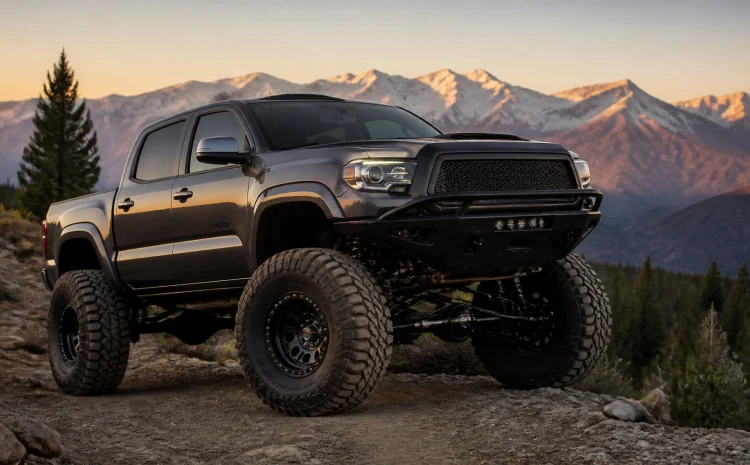
You’ve finally done it. You picked out the perfect lift kit, spent the weekend in the garage (or at the shop), and bolted on a set of aggressive 35-inch or 37-inch tires. Your truck looks like a beast, standing tall against the backdrop of the Bitterroot Mountains. But then you pull out onto Highway 93, hit the gas, and reality sets in.
Suddenly, your rig feels sluggish. It’s hunting for gears on the slightest incline, and that Cummins or Powerstroke that used to pull like a freight train now feels like it’s dragging an anchor. This is the classic “big tire trap.” While most folks focus on clearance and aesthetics, they often overlook the most critical component of a lifted build: the gear ratio.
At Way Maker Offroad in Stevensville, we see this all the time. Drivers come in wondering why their fuel economy has plummeted or why their transmission is running hot. The answer is almost always found inside the differential. Understanding the relationship between tire size and gearing isn’t just for gearheads; it’s essential for anyone who wants a reliable, capable rig in Western Montana.
The Science of Leverage: Why Big Tires Kill Power
To understand why your truck feels “doggy” after a tire upgrade, you have to look at the physics of leverage. Your truck’s drivetrain is a series of levers. The transmission, the transfer case, and the axle gears all work together to multiply the engine’s torque before it reaches the ground.
When you install a taller tire, you are effectively lengthening the final lever in that chain. A larger diameter tire covers more ground in a single rotation, which sounds great for top speed, but it requires significantly more torque to get that rotation started. This effectively “raises” your gearing: numerically lowering the ratio.
If your truck came from the factory with 31-inch tires and 3.73 gears, it was optimized for that specific diameter. Jumping to 37s without changing the gears is like trying to start your mountain bike in the hardest gear while pedaling uphill. You might get moving eventually, but you’re going to strain your legs: or in this case, your engine and transmission: to do it.
The Toll on Your Transmission
One of the biggest misconceptions we hear at our Stevensville shop is that “the engine has plenty of power to turn those tires.” While your diesel might have the torque to handle the load, your transmission is the one paying the price.
When you run oversized tires on stock gears, your transmission stays in lower gears longer to compensate for the lack of mechanical advantage. It will “hunt” back and forth between gears on grades, creating excessive friction and heat. Heat is the number one killer of automatic transmissions. Over time, this constant shifting wears down clutches and bands, leading to premature failure.
By upgrading your drivetrain, you take the load off the transmission and put it back onto the gears, where it belongs. Re-gearing restores the mechanical leverage your truck needs to move those heavy tires without breaking a sweat.

Fuel Economy: The Counter-Intuitive Truth
It seems logical that lower engine RPMs would lead to better fuel economy. On paper, a larger tire means the engine turns slower at 70 mph. However, in the real world of Montana driving: with our wind, hills, and mountain passes: this rarely works out in your favor.
When the engine is forced to operate below its optimal power band, it has to work harder (and consume more fuel) just to maintain speed. You’ll find yourself buried in the throttle more often, and your turbo will be working overtime.
Re-gearing to a numerically higher ratio (like moving from 3.73 to 4.56) actually improves fuel economy in most lifted applications. Even though your engine is spinning at a higher RPM at highway speeds, it’s operating within its “sweet spot” of efficiency. The truck doesn’t have to downshift every time you hit a headwind in the Bitterroot Valley, leading to a smoother, more efficient ride.
Finding Your “Sweet Spot”: The Re-Gearing Math
So, how do you know which gear ratio is right for your rig? It depends on your tire size and how you use the truck. We generally categorize builds into three types:
1. The Daily Driver (Balanced Performance)
If you use your truck for commuting but want it to handle the occasional trail, you want a gear ratio that mimics the factory feel. For most trucks on 35-inch tires, a 4.10 or 4.30 ratio is the sweet spot. It provides enough grunt for the tires without making the engine scream on the highway.
2. The Tow Rig / Overlander
If you’re pulling a camper over Lolo Pass or carrying heavy overlanding gear, you need more mechanical advantage. For 35s or 37s, we often recommend 4.56 or 4.88 gears. This ensures your transmission stays cool and you have the torque needed to merge into traffic while under load. Check out our guide on drivetrain upgrade mistakes to see why matching your ratio to your load is vital.
3. The Hardcore Crawler
For rigs dedicated to technical trails and rock crawling, “deeper” gears are a must. We’re talking 5.13s or higher. This gives you ultimate control and “crawl ratio,” allowing you to navigate obstacles at a crawl without riding the brakes or stalling the engine.
Why Professional Installation Matters in Montana
Re-gearing is not a “driveway project” for most. It is a high-precision task involving tolerances measured in thousandths of an inch. Setting the backlash, pinion depth, and bearing preload requires specialized tools and years of experience. If the gears are off by even a hair, they will howl, overheat, and eventually shred themselves: leaving you stranded in a remote part of the backcountry.
At Way Maker Offroad, our NAPA-certified technicians bring over 30 years of hands-on experience to every axle we touch. We don’t just “slap parts on.” We ensure your routine maintenance and specialty builds are handled with the precision required for Montana’s demanding terrain. We’ve seen what happens when “budget” gear installs go wrong, and it’s never pretty.
Conclusion: Don’t Leave Your Build Half-Finished
A lift kit and big tires are only half of the equation. To truly unlock the performance of your truck, you have to address the gearing. Whether you’re looking to regain your lost fuel economy, save your transmission from an early grave, or just want your truck to feel “snappy” again, re-gearing is the most effective performance upgrade you can make.
Don’t settle for a truck that looks the part but can’t perform. If you’re in Stevensville, Missoula, or anywhere in the Bitterroot Valley, bring your rig by Way Maker Offroad. We’ll help you crunch the numbers and get your drivetrain dialed in for whatever the Montana trails throw at you.
Ready to restore your truck’s power? Contact Way Maker Offroad today to schedule a consultation and get a quote on a gear swap that fits your lifestyle.