Looking For a Truck Lift Kit Installation? 5 Things You Need to Know About Modern Safety Sensors
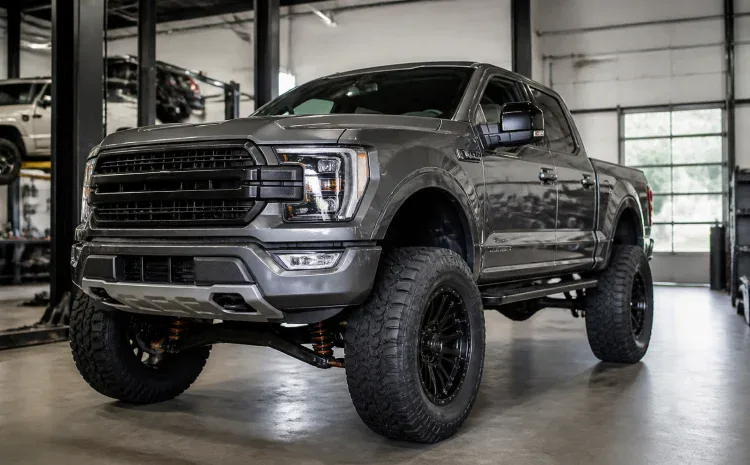
There’s nothing quite like the feeling of picking up your rig after a fresh truck lift kit installation. You walk out to the lot, and there it is: sitting higher, looking meaner, and ready to tackle the roughest trails Western Montana has to offer. But as you climb into the cab and pull out onto the highway, you might notice something is a little… off. Maybe your lane-keep assist is acting twitchy, or your adaptive cruise control keeps slamming on the brakes for no reason.
In the old days, lifting a truck was mostly about iron and rubber. You swapped some springs, threw on some blocks, and called it a day. But modern trucks are basically rolling computers. They’re packed with Advanced Driver Assistance Systems (ADAS) that rely on cameras, radar, and sensors to keep you safe. When you change the height of your vehicle, you’re essentially moving the “eyes” of your truck.
If you’re hunting for a 4×4 off road shops near you, it’s not just about who can bolt on the parts; it’s about who understands the tech behind the ride. Here are five things you absolutely need to know about how a lift kit affects your modern safety sensors.
1. Your Camera’s Perspective Just Changed
Most modern trucks, from the F-150 to the Ram 2500, use a forward-facing camera usually mounted behind the rearview mirror or in the front grille. This camera is responsible for things like lane-departure warnings, automatic emergency braking, and high-beam assist.
When you get a truck lift kit installation, that camera is now several inches higher than it was at the factory. It’s also tilted at a different angle depending on the “rake” of your new suspension. To the truck’s computer, the road now looks further away or angled differently. This can cause the lane-keep system to lose track of lines on the road or trigger false alarms because it thinks you’re closer to an obstacle than you actually are. Without proper recalibration, your truck is essentially squinting at the road, trying to make sense of a perspective it wasn’t programmed for.
2. Radar Blind Spots Aren’t Just for Side Mirrors
Adaptive Cruise Control (ACC) is a lifesaver on those long drives through the Bitterroot Valley, but it relies on radar sensors typically hidden in the front bumper or grille. These sensors emit radio waves to measure the distance between you and the car in front.
When you lift your truck, that radar beam is now pointing higher. Instead of bouncing off the bumper of the sedan in front of you, it might be sailing right over its roof. Conversely, if the lift kit isn’t perfectly leveled, the sensor might be pointing too far down, picking up every bridge expansion joint or shadow on the road as a potential collision.
Getting a professional Western Montana 4×4 service means ensuring these radar systems are re-aimed. You don’t want your truck deciding to emergency brake at 70 mph because it misjudged a shadow, or worse, failing to see the car stopping ahead because the sensor is looking into the sky.
3. The Steering Angle and Lane Keep Logic
It’s not just about height; it’s about geometry. Most people know they need an alignment after a lift: that’s 4×4 101. But what many don’t realize is how the Steering Angle Sensor (SAS) plays into your safety tech.
Your truck uses the SAS to know exactly where your wheels are pointed. Systems like electronic stability control and lane-centering use this data to make micro-adjustments. If your lift kit changes the steering geometry and it isn’t perfectly synced back up with the computer, the truck might think you’re turning when you’re going straight. This can lead to the “Electronic Stability Control” light flashing on every time you take a mild curve, or the lane-keep assist constantly fighting you for control of the wheel.

4. Why Post-Installation Alignment is Only Half the Battle
In the past, a good alignment was the final step of any suspension work. Today, it’s just the halfway point. Once the wheels are straight, the electronic systems need to be told where the “new normal” is. This is called ADAS recalibration.
There are two types of recalibration: static and dynamic. Static involves setting up specific targets in a controlled environment (like a specialized shop floor) so the sensors can “see” and reset their coordinates. Dynamic involves driving the truck at specific speeds on well-marked roads while the computer relearns its surroundings.
Many general 4×4 off road shops might have the tools to bolt on the lift, but they may lack the advanced electrical system repairs and diagnostics equipment needed to finish the job. If your shop tells you “the sensors will just figure it out,” that’s a red flag. These systems are designed to be precise, and “close enough” isn’t good enough when it comes to automatic braking.
5. Professional Recalibration: Your Safety Net
Skipping the recalibration process isn’t just an annoyance; it’s a liability. If those safety systems fail or behave unexpectedly during a critical moment, the consequences can be serious. At Way Maker Offroad, we’ve spent over 30 years seeing how vehicle technology has evolved. We aren’t just here to make your truck look good: we’re here to make sure it performs reliably, whether you’re crawling over rocks or cruising the highway.
When you choose a shop for your truck lift kit installation, ask them about their process for ADAS. Do they handle the electrical diagnostics in-house? Do they follow OEM (Original Equipment Manufacturer) guidelines for sensor aiming? A shop that understands the marriage of heavy-duty hardware and sensitive software is the only shop you should trust with your modern rig.
Ready to Level Up Your Rig the Right Way?
Lifting your truck is one of the most rewarding upgrades you can do, but it has to be done with precision. Don’t settle for a “bolt-on and go” approach that leaves your safety sensors guessing. At Way Maker Offroad, we combine decades of hands-on experience with the technical expertise required for modern vehicle systems.
Whether you’re looking for a hardcore overlanding setup or a reliable daily driver lift, our NAPA-certified technicians have you covered. We’re outdoor enthusiasts ourselves, so we know exactly what your vehicle needs to survive and thrive in Western Montana.
Contact us today to schedule your truck lift kit installation or to learn more about our full range of 4×4 services. Let’s build a rig you can trust on every trail.