7 Mistakes You’re Making with Off-Road Recovery (and How to Fix Them Before You’re Stuck)
Getting stuck isn’t a failure; it’s an inevitable part of the lifestyle. Whether you’re navigating deep slush in the Bitterroot or tackling a mud-slicked incline in the backcountry, your rig will eventually find its limit. The failure happens in the recovery.
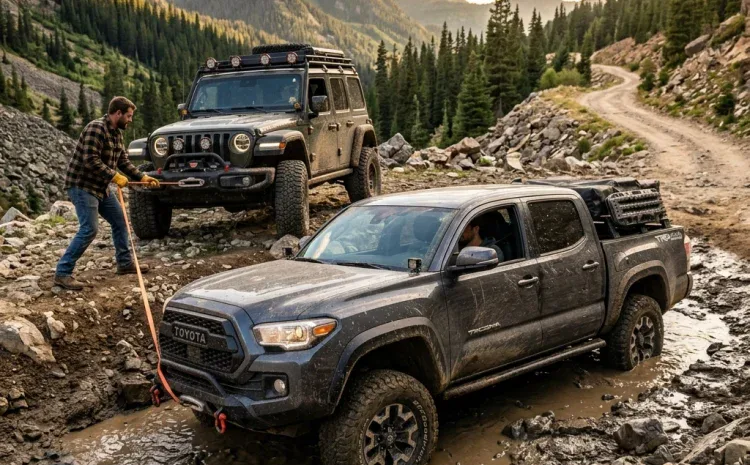
In Western Montana, a bad recovery doesn’t just mean a bruised ego, it means shattered windshields, snapped frames, or worse. Most guys think a winch and a prayer are all they need. They’re wrong. At Way Maker Offroad, we see the aftermath of “trail-side ingenuity” gone wrong. If you want to keep your truck in one piece and your teeth in your head, you need to stop making these rookie mistakes.
Here is the reality of off-road recovery and how to do it without calling for professional off road recovery services to haul your wreckage home.
1. Using the Tow Ball as a Recovery Point
This is the most dangerous mistake in the book. A tow ball is designed for downward tongue weight and steady pulling on a highway. It is not designed for the violent, snatching forces of a kinetic recovery. When a tow ball shears off under tension, it becomes a two-pound steel projectile traveling at 200 mph. It will go through a tailgate, a seat, or a person without slowing down.
The Fix: Use rated recovery points only. If your bumper doesn’t have them, get a hitch-mounted shackle receiver. It slides into your 2-inch receiver and provides a secure, rated point for a soft shackle. If your rig is lacking solid anchor points, it’s time to visit one of the top 4×4 off road shops to get your frame properly outfitted.
2. The “More Gas, More Better” Fallacy
When the tires stop moving and the mud starts flying, the natural instinct is to floor it. All you’re doing is digging a grave for your axles. High-speed wheel spin creates heat, destroys tires, and buries the frame until you’re high-centered. Once the chassis is resting on the ground, the suction of the mud makes recovery ten times harder.
The Fix: As soon as you lose forward momentum, stop. Get out and assess. Lower your tire pressure if you haven’t already, dropping to 12-15 PSI can double your footprint. Use traction boards or a shovel to clear a path. Controlled power wins every time; brute force just breaks drivetrain components.

3. Mixing Up Kinetic Ropes and Static Straps
Using a static “tow strap” for a snatch recovery is a recipe for a snapped frame or a broken strap. Static straps have zero give. Using a kinetic “snatch” rope for a slow winch pull is equally inefficient. If you don’t know the difference, you’re putting unnecessary stress on your vehicle’s recovery points.
The Fix: Match the tool to the task. Use a kinetic rope (which stretches up to 30%) for vehicle-to-vehicle “snatch” recoveries. Use a static, non-stretch strap for winching or as a tree saver. Investing in high-quality gear from our accessories and equipment section ensures you have the right tool for the specific job.
4. Standing in the “Kill Zone”
The “Kill Zone” is the radius around a recovery line where a snapped cable or rope will whip. People love to crowd around a stuck truck to offer “advice.” If a steel winch cable snaps and you’re standing nearby, it doesn’t matter how rugged you think you are, the cable wins.
The Fix: Clear the area. Everyone not involved in the recovery should be at least 1.5 times the length of the extended rope away. Always use a winch damper, even a heavy floor mat or a dampening bag, draped over the middle of the line. If the line breaks, the damper absorbs the energy and drops the line to the ground instead of letting it whip.
5. Trusting Rusted or Unrated Hardware
That rusty shackle you found in the bed of your truck might look “tough,” but if it isn’t rated, it’s a liability. We see guys using hardware store “D-rings” that are meant for hanging porch swings, not pulling an 8,000-pound Cummins out of a ditch. In western montana 4×4 service, we deal with extreme weights and extreme suction; your gear needs to be up to the task.
The Fix: Only buy gear with a visible Working Load Limit (WLL). We highly recommend switching to soft shackles. They are lighter, stronger than most steel shackles, and, most importantly, they don’t turn into deadly projectiles if something fails. If your rig needs a safety overhaul, check out our routine maintenance services to ensure your recovery points are still structurally sound.

6. Not “Air Conditioning” the Mud
Suction is a literal force. When your rig is buried to the pumpkins in thick mud, the vacuum created underneath the chassis can add thousands of pounds of resistance to the pull. If you try to winch against that suction without breaking it, you’ll likely stall the winch or snap a line.
The Fix: Break the vacuum. Use a shovel to dig out around the tires and create a ramp. If you have a high-lift jack, lift the vehicle slightly to let air and water under the tires. It’s back-breaking work, but it’s the difference between a successful recovery and a snapped winch line.
7. Going Solo Without a Plan
The biggest mistake is the one made before you even put the truck in 4-Low: heading into remote Montana territory alone without a way to call for help. Cell service is a luxury, not a guarantee. If you break an axle or get high-centered on a stump, and you’re solo, you’re in for a very long walk.
The Fix: Travel in pairs. If you must go solo, carry a satellite messenger and a full recovery kit including a winch, land anchor, and enough supplies to spend the night. Before you head out, read our Western Montana 4×4 Survival Guide to make sure your rig is actually ready for the terrain.
Recovery Gear: The Technical Breakdown
Understanding your gear is half the battle. Here are the terms every wheeler needs to know:
- WLL (Working Load Limit): The maximum weight a piece of gear is safely designed to handle. Always aim for a WLL that is at least 3x your vehicle’s weight.
- Kinetic Rope: A nylon rope designed to stretch and use stored energy to “boing” a stuck vehicle out.
- Snatch Block: A pulley that allows you to change the direction of your winch pull or double the pulling power of your winch.
- Tree Saver: A wide, static strap designed to wrap around a tree without girdling the bark or damaging the tree.
- Soft Shackle: A loop made of high-strength synthetic rope (UHMWPE) used as a safer alternative to steel D-rings.
Off-Road Recovery FAQs
Q: My winch is making a clicking sound but won’t pull. What’s wrong?
A: This is usually an electrical issue. Check your battery terminals and ground wires. A clicking solenoid often means the motor isn’t getting enough juice. If your electrical is shot, we offer electrical system repairs to get your winch back in action.
Q: Can I use my winch to pull a tree down?
A: You can, but you shouldn’t. Winches are designed for steady pulls, not the sudden “shock” loads of a falling tree. You also risk damaging the internal braking system.
Q: How often should I inspect my synthetic winch line?
A: After every major outing. Look for “fuzzing” or UV damage. If the rope feels stiff or has visible cuts, it’s compromised.
Q: Is a winch necessary for Montana trails?
A: If you plan on leaving the forest service roads, yes. It is the single most important piece of self-recovery gear you can own.
Q: What is the best recovery point for a stock truck?
A: Most stock trucks have “tie-down” loops meant for shipping, not recovery. If you don’t have factory-rated tow hooks, use a hitch-mounted shackle receiver.
Q: I heard my truck’s frame can bend during recovery. Is that true?
A: Yes, if you pull at a severe angle or use a kinetic rope on a vehicle that isn’t rated for it. Always pull as straight as possible. If you suspect frame damage, contact us for a structural inspection.
Gear Up Before You Get Stuck
Don’t wait until you’re axle-deep in a Montana bog to realize your recovery gear is junk. Whether you need a winch install, a suspension beef-up, or a full diesel engine rebuild, Way Maker Offroad is the premier destination for serious 4×4 owners.
Stop by our shop or check out our services to ensure your rig is as tough as the trails it’s tackling.